The advent of generative artificial intelligence has fundamentally altered the landscape of creative and knowledge work. The promise is intoxicating: never stare at a blank page again; summarize dense reports in seconds; generate weeks of content with a single prompt. However, beneath this veneer of extreme productivity lies a significant threat to original thought. When we rely on algorithms to generate the bedrock of our work, we risk outsourcing our cognitive development and homogenizing our output.
The Homogenization of Thought
Generative AI models are designed to predict the most statistically probable next word based on vast sets of training data. By definition, they produce the average, the expected, and the conventional. If a writer uses AI to generate an initial draft, the structure and vocabulary are immediately constrained by the model's statistical biases.
True originality often springs from the unexpected connection of disparate ideas, the idiosyncratic voice of the author, and the messy, nonlinear process of drafting and revising. When you remove the struggle of creating that first draft, you remove the crucible in which unique perspectives are forged. Over time, heavy reliance on AI leads to a flattening of voice—a predictable, sanitized style that lacks the sharp edges of authentic human insight.
The Value of the Blank Page
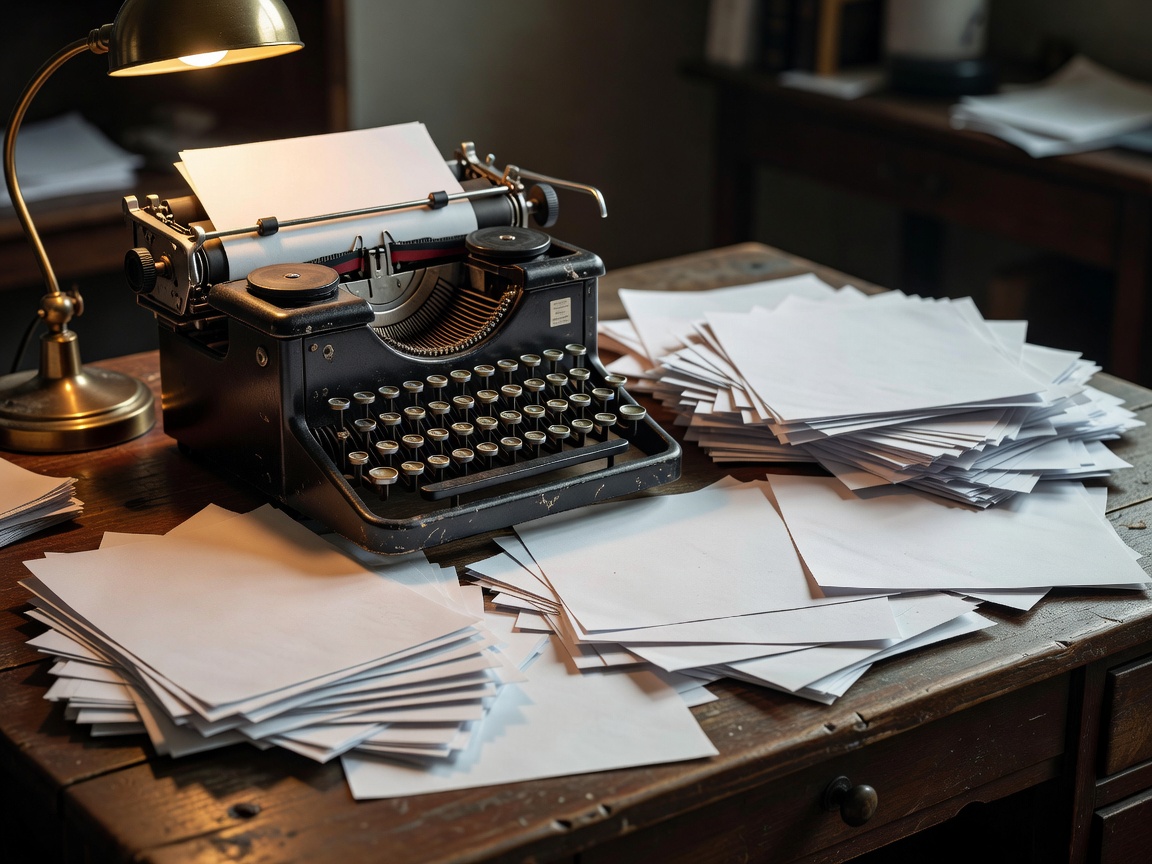
Staring at a blank page is uncomfortable. It forces you to confront the limits of your own understanding. Yet, this discomfort is entirely necessary. The process of searching for the right word, structuring a logical argument, and agonizing over a transition is not merely the mechanics of writing; it is the process of thinking.
As the saying goes, writing is nature's way of letting you know how sloppy your thinking is. If you bypass this struggle by asking an algorithm to generate the text, you miss the opportunity to clarify your own thoughts. An AI-free workflow preserves the integrity of this process. It demands that you wrestle with the material until you have truly mastered it, rather than settling for a superficial, machine-generated approximation.
Building an AI-Free Creative System
Maintaining an AI-free workflow requires intentionality, especially as software companies aggressively integrate generative tools into every text editor and workspace.
- Disable the Prompts: Go into the settings of your word processors, email clients, and note-taking apps and explicitly disable auto-complete, generative drafting, and predictive text features. Remove the temptation from your interface.
- Read Broadly, Synthesize Manually: Do not use AI to summarize books, articles, or papers. The nuance is in the details, and the act of reading closely and taking your own notes is how knowledge is internalized. Rely on personal knowledge management systems like Zettelkasten, entirely written in your own words.
- Embrace Draft Zero: Accept that your first drafts will be terrible. Permit yourself to write poorly. The goal is to get your unstructured thoughts out of your head and onto the page, where they can be manually molded and refined through rigorous editing.
By protecting your workflow from generative intervention, you ensure that the work you produce remains distinctly yours. In a world increasingly saturated with average, machine-generated content, an authentic, deeply considered human voice becomes not a liability, but your most valuable asset.